Scar Management
A scar is repair tissue laid down in a hurry. With time and the right input, scar tissue and the fibrosis around it can be encouraged to soften and move more freely.
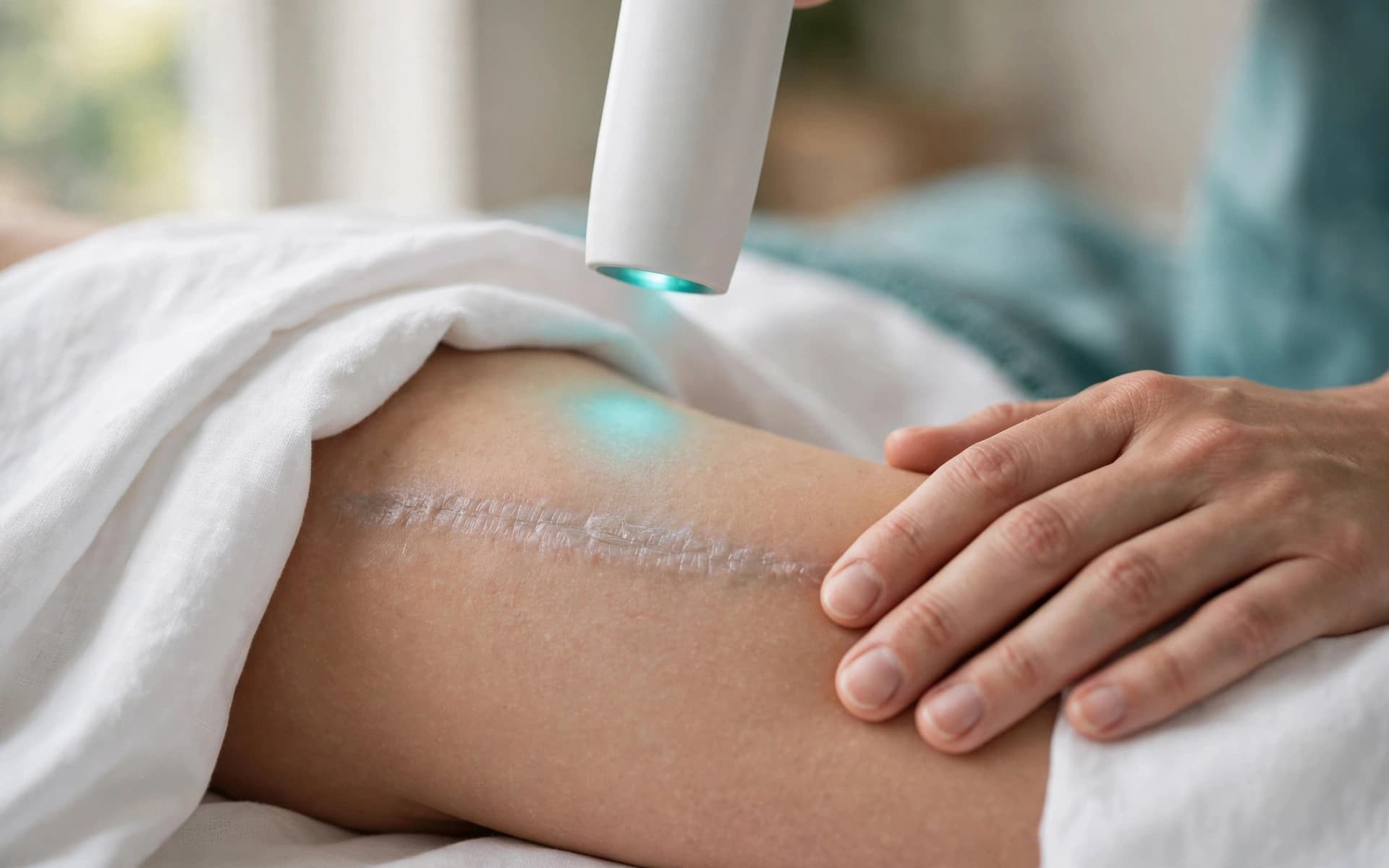
Scar tissue does its job — closing a wound — but it is laid down quickly and without the orderly structure of the tissue it replaces. It can bind to layers beneath it, restrict movement, stay tender or tight, and in the case of fibrosis after surgery or radiotherapy, harden the surrounding tissue as well.
Scar management is slow, patient work. The aim is not to erase a scar — nothing honest promises that — but to support the tissue in becoming softer, flatter and more mobile, and to keep the area around it moving well.
What a program can include
- Low level laser therapy over the scar and surrounding tissue, applied across a course of sessions.
- Mobiderm bandaging, which Kylie trained in specifically, used between sessions with the aim of softening fibrotic tissue.
- Hivamat deep oscillation through the tissue around the scar.
- Manual techniques — careful, graded work on and around the scar once it is fully healed.
- Manual lymphatic drainage where scarring interrupts lymphatic pathways, to encourage fluid around the affected area.
- Home care, including self-massage and skin care for the scar between visits.
Timing and safety
Scar work begins only once a wound is fully closed and your surgeon or doctor is happy for treatment to start. For scars related to cancer surgery within five years of clearance, a doctor's letter of permission is required. Older scars are still worth assessing — tissue responds at any age, though long-established scars change more slowly.
Ready to begin?
Every treatment plan starts with an assessment. Not sure yet? Book a free discovery call instead.
Book an Initial AssessmentHow booking worksYour therapist
Kylie Fletcher — Dr Vodder Method certified to the highest level, 37 years of clinical experience, member of the Australasian Lymphology Association.
About KylieMore in Pain & Recovery
Tissue Recovery
Soft tissue takes time to heal — and swelling, congestion and guarding can slow it down. This work is aimed at supporting the conditions tissue heals best in.
Muscle Tension Support
Long-held tension changes how the whole body feels. Massage, applied with skill and adjusted to how your tissue presents on the day, remains one of the most direct ways to address it.
Recovery Programs
Some situations need more than a single appointment — they need a plan. A recovery program is a structured course of sessions with a goal, a rhythm and home care built in.