Renew Vitality
Regeneration & Tissue Healing Guide
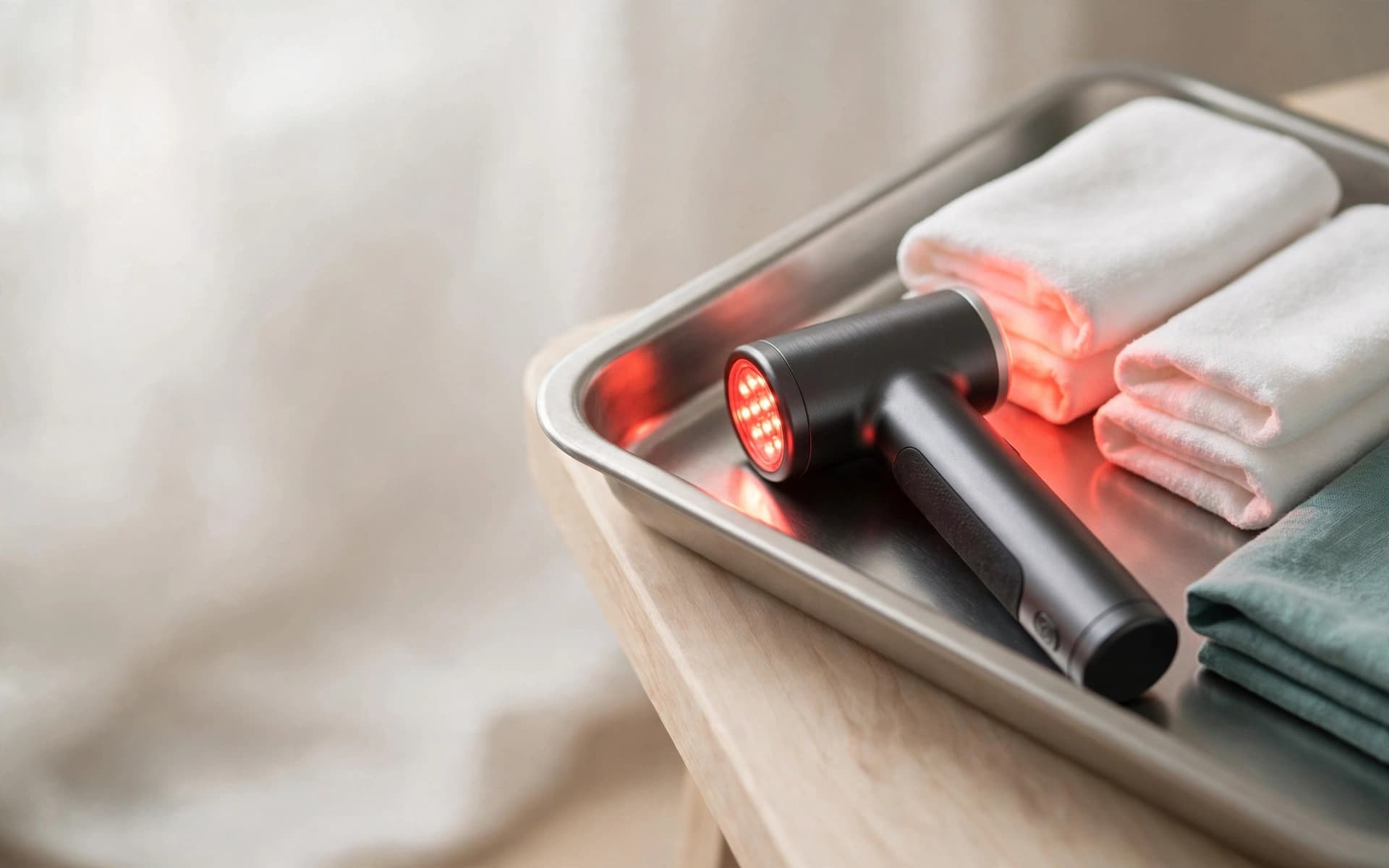
Regeneration therapy is designed to gently support your body's natural tissue repair and recovery after injury, surgery or everyday wear and tear. It combines clinical technologies with lymphatic and physical techniques, and is commonly sought during recovery or for long-standing tightness.
Core Pillars of Regeneration
- Supporting Tissue Repair: Gentle techniques aim to support local circulation and oxygen delivery, which play a part in how small tears in muscle and connective tissue mend.
- Collagen & Skin Support: Some technologies used have been studied for their effects on fibroblasts, the collagen-making cells that support skin firmness and connective tissue resilience.
- Supporting Injury Recovery: Lymphatic techniques are designed to encourage fluid and inflammatory by-products to move away from healing tissue, and many people find this more comfortable.
- Scar Tissue & Fibrosis Care: Treatment aims to soften dense, fibrous tissue, and many people find older or rigid scars feel more pliable over time.
Who Commonly Seeks Regeneration Therapy
- Muscle Strains & Ligament Sprains: People wanting to support flexibility and comfort as strained fibres mend.
- Post-Traumatic & Post-Surgical Wounds: Gentle care around healing areas, in line with your surgeon's or doctor's advice, with the aim of supporting comfort and limiting fibrosis.
- Fibrosis & Mature Scar Tissue: A common reason people book, often hoping to soften dense tissue and move more freely.
- Skin Ageing & Loss of Elasticity: Some people seek care for skin texture and firmness as it changes with age.
- Chronic Overuse Injuries (Tendinopathies): Tendons have a limited blood supply and can be slow to settle, so people often seek supportive care.
Technologies Used in Regeneration Therapy
Equipment is chosen to suit tissue depth and your stage of recovery:
- Low-Level Laser Therapy (LLLT) — Low-level light is applied over the area. Research into photobiomodulation has looked at cellular energy (ATP) production, inflammation and collagen activity, and it is commonly sought for skin and connective tissue concerns.
- Pneumatic Compression Pumps — Intermittent pneumatic pressure is designed to encourage fluid movement. It is used where appropriate in post-surgical care, with the aim of easing oedema and discouraging fluid from pooling.
- Deep Oscillation Therapy — Electrostatic pulsed oscillations create a gentle, deep-acting resonance in the tissue, used with the aim of softening fibrotic scar tissue, easing deep tenderness and supporting circulation in healing areas.
Post-Recovery Timeline & At-Home Care
What to Expect After a Session
Many people feel relaxed after treatment, often with a mild sense of lightness. A gentle wave of tiredness or feeling thirstier than usual is common over the first 24 to 48 hours.
Recommended At-Home Actions
- Hydration & Electrolytes: Sip water steadily and include hydrating fruit juices, smoothies or mineral-rich broths.
- Gentle Movement: Low-impact walking (15–20 minutes) is a gentle way to keep lymphatic circulation moving without straining recovering tissue.
- Following Compression Advice: Please closely follow your practitioner's or surgeon's guidance on prescribed compression garments after surgery or during tissue remodelling.
- Prioritise Rest: Good-quality sleep gives your body valuable downtime to recover.
This guide is general information
Every case is different. What suits you depends on your history, your surgeon’s instructions and what Kylie finds at your assessment — so please treat this as background rather than a personal treatment plan. If anything here raises a question, call 0408 948 817.Related treatment: Tissue Recovery at the clinic